This past week seems to have flown by, with a burst of winter weather, a flower designers show, bush walking, meetings, an artist talk, supporting a friend at a fund-raising event, editing a couple of stories, a flamenco dance workshop, spending time with grandchildren, and not forgetting lunch with friends.
So for this week, I thought I would take the pressure off myself, and just share a few pics.
Here is the rain. We are in spring, but this past few days we have had three rain fronts cross the coast. We are not complaining as the farmers need the rain, but you wouldn't have wanted to be out boating.
Pages
Welcome to Life Images by Jill
Welcome to Life Images by Jill.........Stepping into the light and bringing together the images and stories of our world. I am a photographer, writer and multi-media artist.
Focussing mainly on Western Australia and Australia, I am seeking to preserve images and memories of the beautiful world in which we live and the people in it.
Monday, 25 September 2017
Sunday, 17 September 2017
Kennedy Ranges, Western Australia
This week I am very happy to be guest posting over on Jo Castro's (Lifestyle Fifty) partner blog Zig-a-Zag. Jo's Zig-a-Zag blog specialises in Western Australian travel, and Jo invited me to do a guest post for her.
I have travelled over a lot of Western Australia, so I chose to blog about a place I only visited for the first time a couple of years ago - the spectacular, and relatively easy to get to, Kennedy Ranges - located in Western Australia's Pilbara region.
Tuesday, 12 September 2017
Hunting for wild orchids in Western Australia's mid-west
We have just come back from a week in the mid-west of Western Australia where I was able to indulge my passion for wildflower photography. Although this season isn't as good for wildflowers as it was last year - see my post last year here - Once in 40 year wildflower extraviganza - the wildflowers were still putting on a show particularly if you travelled up the coast from Perth to Geraldton. This most recent trip took us to Lesueur National Park, 30 kilometres east of Jurien, then over to the private reserve, Western Flora, 22 kilometres north of Eneabba on the Brand Highway, inland to Perenjori and Dalwallinu, and then south to the Dryandra Woodland north of Narrogin. We camped along the way, sometimes in caravan parks, and sometimes just out in the bush.
I didn't intend our trip to be a wild orchid hunt, but it became that in a way, as we searched for orchids we hadn't seen before. Wild orchids are often very small, hide under bushes, and blend into their backgrounds, but my husband is a really great orchid spotter to have along. I love adding photos of specimens to my photo library which are new to me.
Monday, 28 August 2017
Crooked Brook Forest walk, Dardanup, Western Australia
Hi everyone, I hope you all had a great weekend and had a chance to get out in the fresh air and do something enjoyable in the great outdoors. On Sunday we went for a walk along one of the walk trails at the Crooked Brook Forest Reserve, which is nestled in jarrah woodlands, about 10 km from Dardanup off Crooked Brook Road, and 25km (or 20 minutes) from Bunbury, in Western Australia's south west.
I always enjoy getting out into the bush away from the stresses of life, especially on a sunny winter or spring day. There really is something regenerating about it don't you agree.
I was surprised when I discovered that we hadn't been to Crooked Brook for a few years despite it only being about 20 minutes from our home. We had our grandson with us, and despite him not particularly wanting to go with us, he enjoyed running along the pathways and discovering things in the bush.
I always enjoy getting out into the bush away from the stresses of life, especially on a sunny winter or spring day. There really is something regenerating about it don't you agree.
I was surprised when I discovered that we hadn't been to Crooked Brook for a few years despite it only being about 20 minutes from our home. We had our grandson with us, and despite him not particularly wanting to go with us, he enjoyed running along the pathways and discovering things in the bush.
Monday, 21 August 2017
What do Gerald Durrell and Nannup in Western Australia, have in common?
Do you ever have those "moments" when you have been talking or reading about or seen something or been somewhere and then something happens out of the blue that relates to it? I am not sure what you call those moments.
Not really serendipity .... though the moment can prove truly delightful ...
I've just read that "analytical psychologist Carl Jung referred to it as "synchronicity" - the convergence of events. The universe's way of telling us that everything happens for a reason and there is self-awareness on a cosmic scale". You can read more here - Wikipedia-Synchronicity
This "synchronicity" happened to me last week - which is why I say that Gerald Durrell and Nannup in Western Australia's beautiful south west have something in common.
But first the back story.....
Not really serendipity .... though the moment can prove truly delightful ...
I've just read that "analytical psychologist Carl Jung referred to it as "synchronicity" - the convergence of events. The universe's way of telling us that everything happens for a reason and there is self-awareness on a cosmic scale". You can read more here - Wikipedia-Synchronicity
This "synchronicity" happened to me last week - which is why I say that Gerald Durrell and Nannup in Western Australia's beautiful south west have something in common.
But first the back story.....
Saturday, 12 August 2017
Winter days & an Energy Bar recipe
It's winter here down under in Western Australia. We had a slow start to winter this year. It was only a couple of months ago in June that I was rejoicing that the rain, and winter, had finally arrived and I celebrated by bringing you a soup recipe - you can see it here if you missed it - Winter Warmers
Since then we have had a very wet July and the start of August has been much the same. We had a rain front cross the coast on Friday night, and another one is due on Sunday. In winter many of us hibernate, so it feels good to get out when we have some sunshine, or to meet up with a friend in a cafe.
Too cold to sit here on the waterfront.....
Since then we have had a very wet July and the start of August has been much the same. We had a rain front cross the coast on Friday night, and another one is due on Sunday. In winter many of us hibernate, so it feels good to get out when we have some sunshine, or to meet up with a friend in a cafe.
Too cold to sit here on the waterfront.....
Labels:
August,
baking,
cook,
energy bars,
nutritious,
nuts,
rain,
winter
Monday, 7 August 2017
TEDx Bunbury 2017
A few weeks ago I was excited to be able to attend my first TEDx which was being held in our home town. You might have heard of TED events. You might have even been to a TED event. But perhaps you have heard about them but never attended because you don't really know what TED is all about?
So what is TEDx you may well ask?
TED is a nonprofit organisation devoted to spreading ideas, usually in the form of short, powerful talks (18 minutes or less). TED began in 1984 as a conference where Technology, Entertainment and Design converged, and today covers almost all topics — from science to business to global issues — in more than 100 languages. Meanwhile, independently run TEDx events help share ideas in communities around the world.
Please click on the link to learn more - Ted - Ideas Worth Spreading
You can experience TED for yourself here - The most popular TED talks of all time
So our TEDx was an independently organised TED event.
So what is TEDx you may well ask?
TED is a nonprofit organisation devoted to spreading ideas, usually in the form of short, powerful talks (18 minutes or less). TED began in 1984 as a conference where Technology, Entertainment and Design converged, and today covers almost all topics — from science to business to global issues — in more than 100 languages. Meanwhile, independently run TEDx events help share ideas in communities around the world.
Please click on the link to learn more - Ted - Ideas Worth Spreading
You can experience TED for yourself here - The most popular TED talks of all time
So our TEDx was an independently organised TED event.
Tuesday, 1 August 2017
Down in the woods today - Gnomesville, Ferguson Valley, Western Australia
"If you go down to the woods today, You're sure of a big surprise" goes the song The Teddy bear's Picnic, but in this case they were not teddy bears, they were Gnomes. Thousands of them! Actually over 10,000! - though I am not sure how they counted them.
Where were we? Gnomesville in the beautiful Ferguson Valley, about eighteen kilometres from Dardanup in Western Australia's beautiful south west.
Monday, 24 July 2017
For love of the Mulla Mulla - Western Australian wildflower
I fell in love with the Mulla Mulla years ago on our first trip through the Western Australian Pilbara to the Kimberley in 1986. Now whenever we head north I look out for my first sight of the Mulla Mulla flowering as it tells me that we have arrived in the Pilbara.
Little did I realise until a couple of weeks ago that there is a variety of Mulla Mulla that grows in the Western Australian wheatbelt - the Green Mulla Mulla - Ptilotus polystachyus. We had seen it in the north, and in the midwest and east of Hyden, but I don't recall ever seeing it in the wheatbelt. But there it was growing near Dumbleyung, and along the roadside northwards through the wheatbelt, and actually on my brother-in-law and nephew's property in Bruce Rock! I was astounded as I don't remember ever having seen it flower there - but perhaps I had never visited at flowering time before. I was in raptures. From my reading since I see that the Green Mulla Mulla grows in woodland and plains in sand from Halls Creek down to Exmouth, Jerramungup in the south and Giles in the far east.
Sunday, 16 July 2017
Lake Dumbleyung - Western Australia - once in 20 year phenomenon
266 kilometres south east of Perth in the heart of Western Australia's southern wheatbelt is the town of Dumbleyung and a lake - Lake Dumbleyung. Typical of many lakes in the wheatbelt it is a salt lake. This year the town is encouraging visitors to come and see the lake - why? - because the lake has flooded. What is so unusual about that? - because it is a "once in twenty years phenomenon". Usually
a virtually dry salt lake, Lake Dumbleyung has only overflowed four times in the
past one hundred years, the most recent being in 1983, and now this year 2017.
The flooding of Lake Dumbleyung is a sight not to be missed. If you don't see it this year you may have to wait another 20 years to see it again. The lake was only a slight "detour" from our route on the way to visit my family's farm in Bruce Rock, so to Lake Dumbleyung we went.
This is what the lake looked liked when we last visited in October 2011. Yes some water, but not full. Probably only a foot or so deep.
And the view last week. It is easy to see why when the lake is in flood it becomes a focal point for the community, birds and wildlife flourish, and the Dumbleyung Ski Club and Sailing Club spring back to life.
And the reason for the flooding this year? - in February the region received summer rains in excess of 160mm.
Realising the economic benefits from tourism and their lake, Dumbleyung is encouraging people to visit. “Initially the flooding ruined stock feed, caused erosion and damaged fences, but as the rain continued and the filling of Lake Dumbleyung began, we realised this was a rain that could change our community.” Gordon Davidson, Dumbleyung Shire President.
After taking in the views we decided to have our lunch in the shelter of the Lake Dumbleyung Sailing Club building as the wind was bitterly cold. The building looked fairly new, so I wasn't surprised to read that it was recently rebuilt after the original building was blown down during storms in February. No doubt there has been a resurgence of sailing club activities this year with the flooding of the lake.
Thought to be derived from the Aboriginal word Dambeling meaning large lake or sea, the lake historically has been a seasonal hunting area and meeting place for Aboriginal family groups.
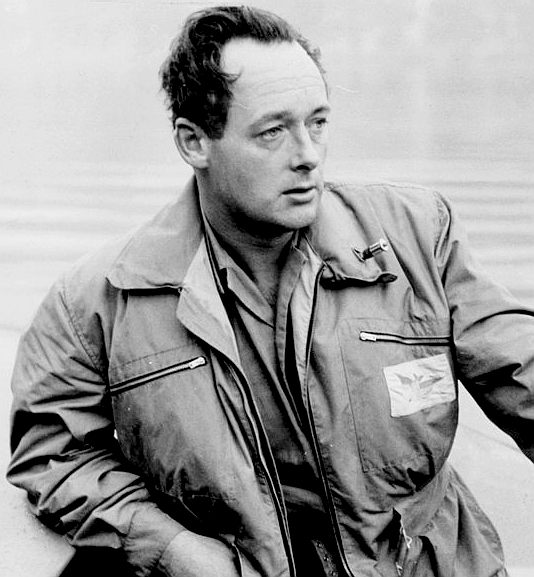
The 52 square kilometre lake is the largest natural body of inland water in Western Australia - 13 kilometres long and 6.5km wide. It sprung into world focus on 31 December 1964 when Donald Campbell broke the world water speed record on Lake Dumbleyung in his jet propelled hydroplane boat, 'Bluebird K7', in which he reached the speed of 444.66 km/h - 276.3 m/h.
Campbell had already broken the world land speed record on Lake Eyre in South Australia on 17 July 1964 (648.73 km/h, 403.10 m/h) and by breaking the world water speed record on Lake Dumbleyung he became the only person to have ever broken both speed records in one year. Donald had achieved his dream.
The best place to view the lake is from Pussycat Hill (don't you love the name). Here you will find interpretive signage and a memorial celebrating Campbell's achievements.
Donald Campbell made a number of speed records during his life. Sadly he died trying to break his own record in Bluebird K7 on Coniston Water in Cumbria, England on 4 January 1967. You can read more information about Donald Campbell here - Australian Land Speed Racing
Below here you can see the memorial on Pussycat Hill unveiled by his daughter, Gina Campell.
In Dumbleyung itself you can see a full scale replica of Bluebird K7, the result of thousands of dollars of community fundraising, volunteer hours and shire contributions. It was completed in time for the 50th anniversary of Campbell's historic run on 31st December, 2014.
Not far from the Bluebird replica is the old railway station where you can see a collection of fascinating photos from the past.
Where is it?: travel south from Perth to Wagin on the Great Southern Highway, then east along the Wagin Dumbleyung Road. Access to Lake Dumbleyung is signposted on the road.
Please be aware that you are partly on private property and partly within the Lake Dumbleyung Nature Reserve. Camping, open fires, pets and firearms are not permitted.
Bird watching - Lake Dumbleyung is a wetland of national and international significance, supporting many kinds of birds following good rains, including migratory species from the northern hemisphere.
The town of Dumbleyung is 8 km further east where there are a variety of accommodation options. Please go to their web site for more information, including downloadable maps and brochures: Visit Dumbleyung Shire
or on Facebook: Dumbleyung Shire
Thank you so much for stopping by. I hope you have enjoyed this visit to Lake Dumbleyung. I value your comments and look forward to hearing from you. I will try to visit your blogs in return. Have a wonderful week.
I am linking up to the link-ups below. Please click on the links to see fabulous contributions from around the world - virtual touring at its best!
The flooding of Lake Dumbleyung is a sight not to be missed. If you don't see it this year you may have to wait another 20 years to see it again. The lake was only a slight "detour" from our route on the way to visit my family's farm in Bruce Rock, so to Lake Dumbleyung we went.
This is what the lake looked liked when we last visited in October 2011. Yes some water, but not full. Probably only a foot or so deep.
And the view last week. It is easy to see why when the lake is in flood it becomes a focal point for the community, birds and wildlife flourish, and the Dumbleyung Ski Club and Sailing Club spring back to life.
And the reason for the flooding this year? - in February the region received summer rains in excess of 160mm.
Realising the economic benefits from tourism and their lake, Dumbleyung is encouraging people to visit. “Initially the flooding ruined stock feed, caused erosion and damaged fences, but as the rain continued and the filling of Lake Dumbleyung began, we realised this was a rain that could change our community.” Gordon Davidson, Dumbleyung Shire President.
After taking in the views we decided to have our lunch in the shelter of the Lake Dumbleyung Sailing Club building as the wind was bitterly cold. The building looked fairly new, so I wasn't surprised to read that it was recently rebuilt after the original building was blown down during storms in February. No doubt there has been a resurgence of sailing club activities this year with the flooding of the lake.
Thought to be derived from the Aboriginal word Dambeling meaning large lake or sea, the lake historically has been a seasonal hunting area and meeting place for Aboriginal family groups.
The 52 square kilometre lake is the largest natural body of inland water in Western Australia - 13 kilometres long and 6.5km wide. It sprung into world focus on 31 December 1964 when Donald Campbell broke the world water speed record on Lake Dumbleyung in his jet propelled hydroplane boat, 'Bluebird K7', in which he reached the speed of 444.66 km/h - 276.3 m/h.
Campbell had already broken the world land speed record on Lake Eyre in South Australia on 17 July 1964 (648.73 km/h, 403.10 m/h) and by breaking the world water speed record on Lake Dumbleyung he became the only person to have ever broken both speed records in one year. Donald had achieved his dream.
The best place to view the lake is from Pussycat Hill (don't you love the name). Here you will find interpretive signage and a memorial celebrating Campbell's achievements.
Donald Campbell made a number of speed records during his life. Sadly he died trying to break his own record in Bluebird K7 on Coniston Water in Cumbria, England on 4 January 1967. You can read more information about Donald Campbell here - Australian Land Speed Racing
Below here you can see the memorial on Pussycat Hill unveiled by his daughter, Gina Campell.
In Dumbleyung itself you can see a full scale replica of Bluebird K7, the result of thousands of dollars of community fundraising, volunteer hours and shire contributions. It was completed in time for the 50th anniversary of Campbell's historic run on 31st December, 2014.
Not far from the Bluebird replica is the old railway station where you can see a collection of fascinating photos from the past.
Where is it?: travel south from Perth to Wagin on the Great Southern Highway, then east along the Wagin Dumbleyung Road. Access to Lake Dumbleyung is signposted on the road.
Please be aware that you are partly on private property and partly within the Lake Dumbleyung Nature Reserve. Camping, open fires, pets and firearms are not permitted.
Bird watching - Lake Dumbleyung is a wetland of national and international significance, supporting many kinds of birds following good rains, including migratory species from the northern hemisphere.
The town of Dumbleyung is 8 km further east where there are a variety of accommodation options. Please go to their web site for more information, including downloadable maps and brochures: Visit Dumbleyung Shire
or on Facebook: Dumbleyung Shire
Thank you so much for stopping by. I hope you have enjoyed this visit to Lake Dumbleyung. I value your comments and look forward to hearing from you. I will try to visit your blogs in return. Have a wonderful week.
I am linking up to the link-ups below. Please click on the links to see fabulous contributions from around the world - virtual touring at its best!
Image-in-ing
Wednesday Around the World at Communal Global
Travel Photo Thursday
Wednesday Around the World at Communal Global
Travel Photo Thursday
Subscribe to:
Comments (Atom)