Welcome to Life Images by Jill

Welcome to Life Images by Jill.........Stepping into the light and bringing together the images and stories of our world. I am a photographer, writer and multi-media artist.
Focussing mainly on Western Australia and Australia, I am seeking to preserve images and memories of the beautiful world in which we live and the people in it.

Welcome!

Welcome!
PLEASE CLICK ON THE IMAGE TO GO TO MY RED BUBBLE STORE.
Showing posts with label Hopetoun. Show all posts

Monday, 13 February 2023

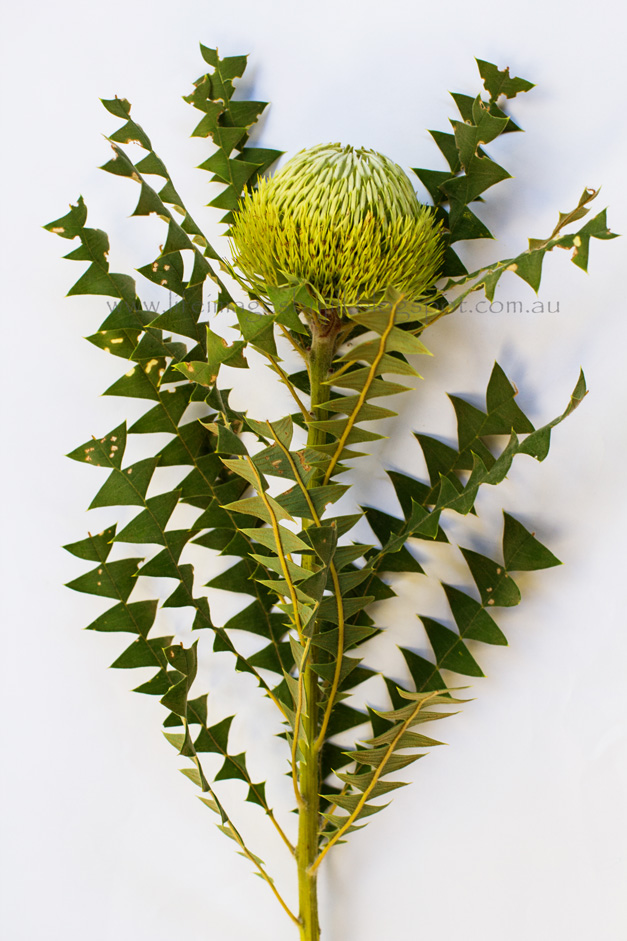
Banksia baxteri - Baxter's Banksia - Western Australia

 Hi everyone, I hope you and yours are doing well. 

Last week we took a short three night trip away to the forest regions a couple of hours south of where we live. More on that later. 

On our way home I bought a glorious bunch of Banksia baxteri - Baxter's Banksia - for a local shop in Balingup and grown by a local grower. Looking through my photos I am not sure I have seen these in full flower in the wild, though we have seen the heads starting to form nuts when we have been in the Fitzgerald National Park near Hopetoun in spring. 


It was named by Robert Brown after the collector, William Baxter, who gathered it in 1829 near King George Sound in Western Australia. 

A shrub up to 4 metres tall, it flowers along the south coast of Western Australia, during December to May, mainly January to March. 

The lemon coloured flowers grow on the end of the stems and the leaves form a sort of cup shape around the flower. 

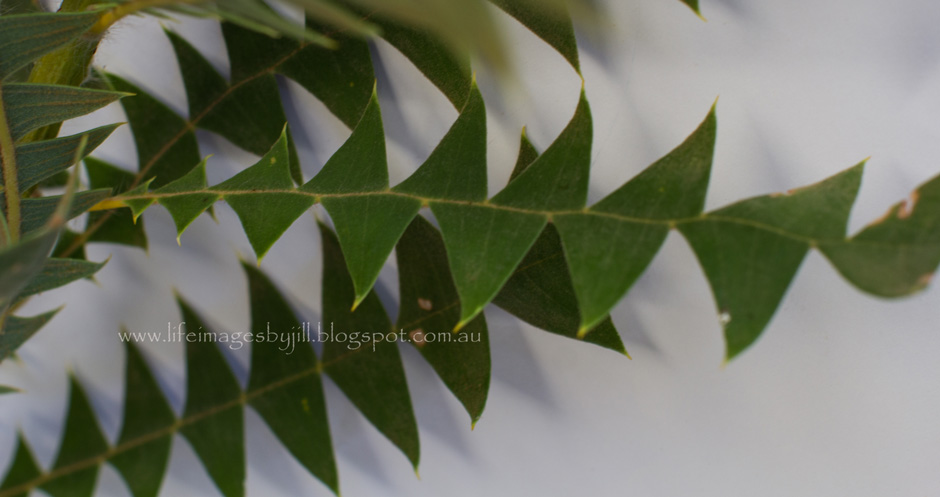
It has the typical saw-tooth leaf of most banksias, though I learnt that the leaf of each Banksia type is slightly different, which is a handy identification tool. 

It grows from seed or cuttings and flowers within 3-4 years. I am thinking I need to grow one, they are so beautiful. 

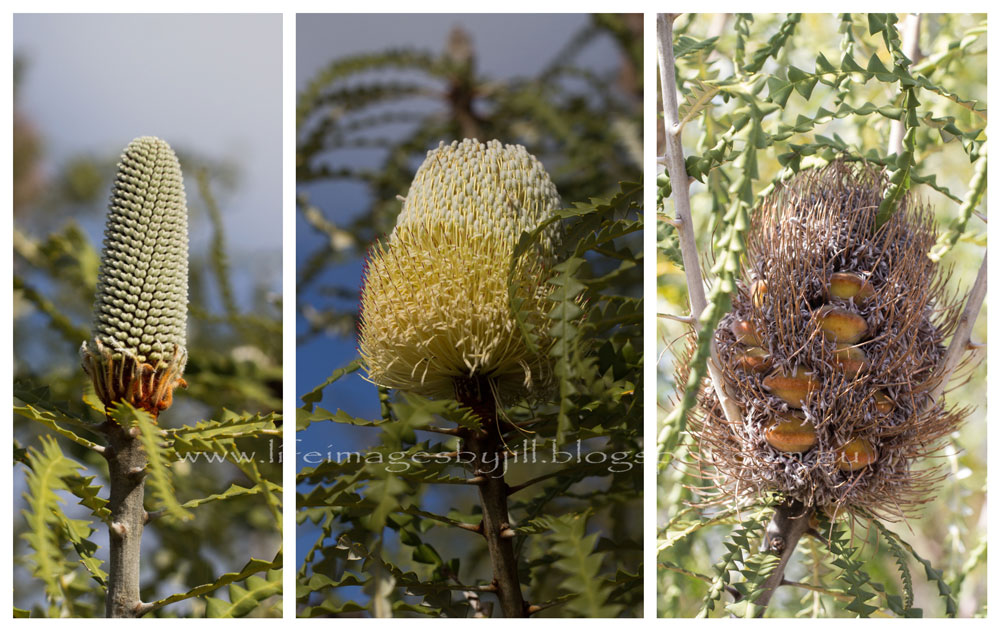
Here are some spent examples we saw flowering in the Fitzgerald River National Park near Hopetoun and Tozers Bush Camp near Bremer Bay along the south coast last August. Your can see the nuts starting to form. 


That's it from me today. I hope you have enjoyed this little look at Baxters Banksia - Banksia baxteri 

Information from: Banksias - 2nd edition - by Kevin Collins, Kathy Collins & Alex George - Bloomings Books - and available from various booksellers 

You can learn a bit more about Banksias over on my blogpost - The iconic Australian Banksia
Banksias belong to the Proteaceae plant family. Characterised by their flower spikes and woody seed cones they range from ground hugging plants to 30 metre high trees. There are 78 known Banksias, 76 species in Australia, 62 of which are endemic to Western Australia, and 30 of these growing between Esperance and Walpole on our southern coast. In recent years the genus Dryandra has been incorporated into the genus Banksia, so the genus now totals 173 species.

You might also like:

Thank you so much for stopping by. I value your comments and look forward to hearing from you. I will try to visit your blogs in return. Have a wonderful week. 

I am linking up to the link-ups below. Please click on the links to see fabulous contributions from around the world - virtual touring at its best!
   
Hello there! I love reading your comments. If you scroll down to the bottom you can comment too! I would love to hear from you.

My heart goes out to those suffering through war, earthquake, flooding, illness, poverty, starvation and other disasters throughout the world. 


Sunday, 2 October 2022

The Iconic Australian Banksias


Banksias are among Australia's most iconic plants. they were named after Sir Joseph Banks (1743-1820 ), who, in 1770, was the first European to collect specimens of these plants while on his voyage of discovery with Captain James Cook. Cook mapped the east coast of Australia which paved the way for British settlement 18 years later.

Banksias belong to the plant family Proteaceae. Characterised by their flower spikes and woody seed cones they range from ground hugging plants to 30 metre high trees. There are 78 known Banksias, 76 species in Australia, 62 of which are endemic to Western Australia, and 30 of these growing between Esperance and Walpole on our southern coast. In recent years the genus Dryandra has been incorporated into the genus Banksia, so the genus now totals 173 species.

This one you see below here is the Candlestick Banksia - Banksia attenuata, commonly known as the candlestick banksia, slender banksia or biara to the Noongar people. This tall tree grows prolifically in the area where I live south of Perth. 

Over the last couple of weeks I have spent time trying to identify some of the Banksia varieties we saw during our south coast travels in August to East and West Mt Barren, the Fitzgerald River National Park near Hopetoun, Tozers Bush camp near Bremer Bay and the Stirling Range National Park north of Albany.

Here are some of the Banksias I have been able to identify with the help of The Wildflower Society of WA's facebook page, Kevin Collins, Kathy Collins & Alex George's book Banksias, and Gillian Craig's book Native Plants of the Ravensthorpe Region.Thank you all!

I hasten to add I am not a botanist, but I have tried my best.


Below is the Showy Banksia - Banksia speciosa. It grows along the south coast from East Mt Barren to Israelite Bay. A shrub to 8 metres tall it flowers throughout the year, with a peak in summer and autumn. You can see in this photo the beginning of the flower, flowering, and then the seed head. These photos were taken near Esperance.


One of the most spectacular of the Banksias in Fitzgerald National Park is the Scarlet Banksia - Banksia coccinea. Also growing up to 8 metres, it grows from Albany to the Stirling Ranges, Fitzgerald National Park and east to Stokes National Park. It flowers from June to January. These photos were taken in the Stirling Ranges National Park but we also saw them widespread in the Fitzgerald National Park on the coast.


This one is the Lemann's Banksia - Banksia lemanniana. It is a shurb to 5 metres and grows near the south coast from West Mt Barren to Ravensthorpe. As you can see below, the flowers hang down. It flowers from October to January. We saw this one in the Fitzgerald National Park near East Mt Barren.


One of the largest Banksias flowers is the Woolly Banksia - Banksia baueri. A 2-3 metre high shrub it flowers from May to July, so these flowers you see here are finished. We saw this plant in Fitzgerald National Park and Tozers bush camp near Bremer Bay. It flowers from Kweda and Toolibin to Bremer Bay, east to Munglinup and also on the South Stirling plains.  

Another banksia which had finished flowering when we visited is Baxter's Banksia - Banksia baxteri. We also saw this one in Fitzgerald and Tozers. It grows to 4 metres near the south coast from the Sitrling Ranges to Oldfield River east of Hopetoun. It flowers from December to May. 

The one below shows how tough Banksias can be. This is the Suuthern Plains Banksia - Banksia media. We saw it clinging to the rocky cliff below the lookout at Cave Point in the Fitzgerald River National Park near Hopetoun. There is a huge variation in size of this plant from 10 metres to a prostrate 0.2metre shrub. It grows from the eastern end of the Stirling Ranges to Israelite Bay. 

Flowering March to August these flowers you see here have finished. 

I am told this is also the Southern Plains Banksia - Banksia media. In this variation the tips of the "perianth" are coloured. They can be grey, gold, pinkish-red, chocolate brown or even black. Below you see the side and above views. 

The flower below we saw along the access road to Mt Trio in the Stirling Ranges National Park, in an area that had been completely burnt out prior to our visit in 2019 following the devastating summer bushfires. It was so heartening to see the bushland coming back. 

I believe this is the Fox Banksia - Banksia sphaeracarpa - the botanical name relates to its spherical form. A shrub to 2 metres tall it has a wide range from the Darling Plateau east of Perth south to the Stirlling Range and Cape Riche. 

I believe this ground hugging variety, which we saw growing at the Central lookout on the Stirling Range Drive, to be Banksia gardneri var brevidentata due to the short tooths on the leaves. It flowers from April to July and is restricted to the Stirling Ranges and a single population near Albany.


Well that is it from me today. It has been a fascinating journey tryng to identify these banksias. I learnt that the leaves of the different banksia varieties are all a bit different so it is important to photograph the leaves as well as the flowers.

Here is a close up of the Banksia fruit or nut. The follicles open to release the seeds. Sometimes this does not happen until the nut is burnt or completely dried out.


I have blogged about banksias before -

In celebration of the Australian Banksia

the Candlestick Banksia

Oh and just one more, not from the south coast but I am going to include it anyway just because I liked it and we saw it in a Banksia park near Esperance - Lesueur banksia or pine banksia - Banksia tricuspis. You can see how different the leaves of this banksia are. A small tree to 4 metres it grows around Mt Lesuer near Jurien on the west coast north of Perth and flowers from March to July. 


Thank you so much for stopping by. I hope you have enjoyed seeing some of the 30 Banksia varieties that grow along our south coast region of Western Australia. 

Here is a link to some more Banksia information:
Book review - Banksias by Collins, Collins & George

I value your comments and look forward to hearing from you. I will try to visit your blogs in return. Have a wonderful week. 
I am linking up to the link-ups below. Please click on the links to see fabulous contributions from around the world - virtual touring at its best!
   
MosaicMonday at Letting Go of the Bay Leaf
Sharon's Sovenirs 
Our World Tuesday

Pictorial Tuesday 
ThroughMy Lens 
Image-in-ing
My corner of the world through my camera 
Wednesday Around the World at Communal Global hosted by Randomosity. 
       and Little bird - Pienilintu
Thankful Thursday 
Welcome to Nature Thursday


Hello there! I love reading your comments. If you scroll down to the bottom you can comment too! I would love to hear from you.

Sunday, 26 November 2017

Biodiversity Hotspot - Fitzgerald River National Park, Western Australia

Looking back through my travel pics I discovered that it was October 2011 when we last visited the Fitzgerald River National Park on Western Australia's south coast, and I was very keen for a return visit so I could take photos of the iconic wildflowers of the region. So in late October we hitched up our caravan and took off for a week to explore.

In my blog a couple of weeks ago I showed you the Farm Gate Art Trail centred around Ravensthorpe and Hopetoun. You can click here if you missed it - Farm Gate Art Trail 

These two towns, and nearby Bremer Bay, are the gateway to the Fitzgerald River National Park, a world renowned global biodiversity hotspot, bordered by the Southern Ocean to the south and the wheatbelt to the north. 


Sunday, 12 November 2017

Farm Gate Art Trail & Wildflowers - Ravensthorpe, Western Australia

"What was that in the paddock back there?" I exclaimed, twisting my head out the window to look back the way we had come. My hubbie "threw out the anchors" (ie stopped the car), turned the car around, and headed back the way we had come. And there they were, Scarlet Banksias, standing tall and proud on the edge of the paddock. 


But they weren't the usual Scarlet Banksias - Banksia coccinea - that were on our list of wildflowers we hoped to see in the Fitzgerald River National Park. These were made of metal and what looked like street sweeper brushes. You can see a closer view of the art work (but of course I couldn't jump the fence) and the native flowers below. The artists had captured them beautifully. 


Sunday, 24 June 2012

Hopetoun & Fitzgerald River National Park, Western Australia

Last October we visited Hopetoun and the Fitzgerald River National Park on Western Australia's south coast.

  Below is a excerpt from my latest article published in "On the Road" magazine , July 2012 - "Coastal Palatte of Colour" which I wrote following our trip.  As you scroll through you can see some mosaics of some of the glorious wildflowers to be found in the Park. 

Here is the opening page of the article 


Sunday, 16 October 2011

Hopetoun & the Fitzgerald River National Park, Western Australia


We recently took a camping trip to Hopetoun located on our south coast, east of Esperance and 50km south of Ravensthorpe where Western Australia meets the Southern Ocean.   

The main attraction for tourists to Hopetoun is the pristine coastline, easily accessible unspoilt beaches, walk trails and drives, beachside camping, and the magnificent Fitzgerald National Park and Eyre Ranges which borders the town. On a clear day the views from the top of East Mount Barren, only minutes from town, appear to go on forever.  Fitzgerald is the largest and most botanically significant national park in Australia, and one of the most flora-rich conservation areas in WA, with a biodiversity of 1800 known species of flowering plants, including 75 varieties which are found nowhere else, and is an internationally recognised Biosphere Hotspot. Currently roads are being upgraded in the area, which will make Fitzgerald even more accessible.

It was the thought of a few days in the sun and the wildflowers that drew us to Hopetoun in October, and the region lived up to its name – the beaches were beautiful and the variety of wildflowers where truly amazing.  The best way to enjoy them is to stop along the roadside and walk a short way into the bush, or walk along one of the trails, or climb East Mount Barren.

This was our first trip to Hopetoun and the Fitzzgerald River National Park, and there were many wildflower species we had never seen before -

Below is the Scarlet Banksia - Banksia coccinea. Seen here along the roadside near Hopetoun. The plant grows to 8 metres. In this picture you can see the flower forming on the RHS to fully open in the middle photo. In the first photo you can see the red parts of the flower folded over in curls, which open out as the flower matures as in the second photo.


This is the Qualup Bell - Primelea physodes. See here at East Mount Barren with raindrops!

And below is the Barren's Regelia - Regelia velutino.
See here with a view from East Mount Barren over the ocean.


This is the Rusty Hakea - Hakea ferruginea. I love the way the flowers form in the cups of the heart shape leaves.


This is the Royal Hakea - Hakea victoria. A most unusual plant which grows up to 4 metres high. Seen here at East Mt Barren . Unfortunately we didn't see one flowering - the flowers form in clusters in the cups of the leaves.


This is the Shining Honeypot - Dryandra obtusa.
It is a prostrate shrub whose flowers come out of the ground. This is listed in my wildflower book as being uncommon, so I was very excited to see it.


And some views from East Mount Barren in the Fitzgerald National Park. On the right is the Southern Ocean, and on the left Culham Inlet - looking towards Hopetoun.


This is looking south west over the National Park and the Southern Ocean. 


 This is the view from East Mount Barren the day we climbed it - it was cloudy, misty rain and we climbed up into the clouds. 


 And at days end a walk on the beach and a beautiful sunset. 

I hope you have enjoyed this little tour of Fitzgerald River National Park and the beautiful and unusual wildflowers I have shared with you. I hope to bring you more photos of our trip in the coming days. 

I am linking up with Mosaic Monday at Little Red House. To see the work of Mary and other wonderful contributors - please go to the link - Mosaic Monday

Have a wonderful week.

To read more about Hopetoun and the FItzgerald River National Park you can click on the link here - Hopetoun & FItzgerald River  - where you can read more and see my article printed in "On the Road" magazine, July 2012
 

Tuesday, 11 October 2011

Sunset on Steve Jobs

A quote from Steve Jobs from Apple Inc Co-Founder, a visionary and creative genius who died from pancreatic cancer on Wednesday 5 October at the age of 56.....

“And most important, have the courage to follow your heart and intuition. They somehow already know what you truly want to become. Everything else is secondary.”


I took this photo walking down to the beach late afternoon at Hopetoun on Western Australia's south coast on Sunday.